News from Historic Preservation Services
Historic Preservation Matters Newsletter
Latest Updates
  • Celebrate Hispanic Heritage Month from Sept. 15 – Oct. 15!
    • Did you know that there are two self-guided walking tours related to our local Hispanic/Latinx history from Historic Preservation Services? Check them out!
    • Mujeres de Colores and the Center for Creativity at the Historic Carnegie Library will be honoring our local early Hispanic and Mexican baseball players, many who came out of the beet fields of Fort Collins, in an exhibit this September. Info about exhibit dates and times are available under the September exhibit listing. Additionally, the ballfield at City Park where the Hispanic League teams regularly played is also under consideration for listing on the State Register of Historic Properties.
  • Save the Date: Poudre Landmarks Foundation's 41st Annual Historic Homes Tour
    • The Historic Homes Tour (HHT) is coming up on Saturday, Sept. 13 from 10 a.m. to 4 p.m. Details and tickets are available now!
      • Interested in volunteering at this event? After doing a pre-event training, volunteers will do ticket checking, convey information about the specific property at which they are stationed, and answer questions for tour-goers in a 3.5 hour shift. Volunteers receive a free ticket to the tour! Learn more and sign up to volunteer on the City's volunteering platform.
    • From 6 to 7:30 p.m. on Monday, Sept. 8, there will also be a pre-tour lecture event, "Growing Fort Collins: Architecture and the Natural World," at the Fort Collins Senior Center featuring architectural and historical information about tour properties to enhance your HHT experience. Details and tickets are available now!
  • Laporte History Bike Tour
    • Join Historic Larimer County for a bike tour of Laporte's most important sites on Sept. 13 at 9:30 a.m.! Learn about places like the site of the original Camp Collins, the site of the stage station, and one of the earliest saloons, as well as the challenges related to preserving these early sites. Logistical information and RSVP link can be found on the event page.

Are you a historic property owner?

Contact Historic Preservation Services (preservation@fcgov.com; 970-224-6078) to learn more about financial support programs for qualifying rehabilitation work and for information on required design review.

Last Month's Historic Preservation Commission (HPC) Decisions

Meeting Date: Aug. 20, 2025

  • Consent Agenda
    • Minutes of June 18, 2025
  • Discussion Agenda: 
    • Staff Activity Report
    • Single-Unit Dwelling Demolition Notification - 1617 Person Ct. (Acknowledged, no action taken)
    • Final Development Review - 360 Linden St., The Linden, mixed use (Approved 5-0)
    • Conceptual Development Review - 1000 W. Prospect Rd. - Proposed 6-story student housing project with adaptive reuse of main house and other site features (Conceptual - feedback only; item continued to Sept. 17)

Applications Now Open to Join the Historic Preservation Commission

Are you interested in applying to be on the Historic Preservation Commission? The Historic Preservation Commission (HPC) is a nine-member, quasi-judicial volunteer commission responsible for guiding preservation policy and making decisions related to Fort Collins Landmarks. There are two openings on the board and the City Clerk’s Office is now accepting applications. Applicants with background in history, preservation, archaeology, architecture, the legal profession, or real estate are encouraged to apply.

Meetings are on the 2nd and 3rd Wednesdays of each month, starting at 5:30 p.m. in City Hall. The City provides dinner at 5:00 p.m.

City staff provide onboarding training that is general to all City board and commission members, and more specialized information about serving on the HPC. To apply, visit Engage: Get Involved.  

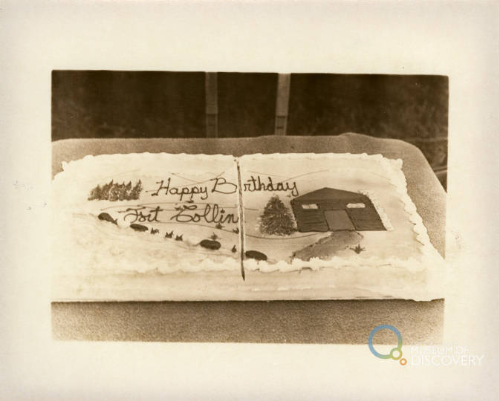
Happy 57th Birthday, Fort Collins Historic Preservation Program!

The City's historic preservation program began in September, 1968, when City Council passed Fort Collins' first preservation ordinance, establishing the Landmark Preservation Commission (now the Historic Preservation Commission). In 1984, the program moved under the City's Planning department with its first dedicated staff person. Since that time, Historic Preservation Services has grown to a small team in the Community Development and Neighborhood Services Department that supports historic preservation activities throughout the city, including landmark design review of any proposed exterior changes to 324 individually designated historic properties and four historic districts. 

(Photo: "Cut Birthday Cake," Photo, Aug. 21, 1980, H07686, Local History Archive at the Fort Collins Museum of Discovery, https://fchc.contentdm.oclc.org/digital/collection/ph/id/51026/rec/17)

Commissioner Spotlight

Meet the members of the Historic Preservation Commission (HPC)! These volunteers offer their experience, expertise, and time to provide feedback and make decisions on historic preservation matters in the city.

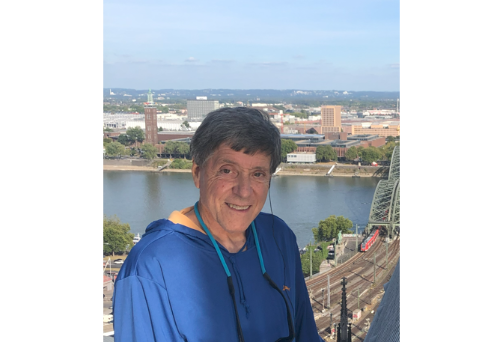
Name: Jim Rose

How long have you served on the HPC?

  • I was appointed to the Landmarks Commission (which became the HPC) in the summer of 2020, so I’ve been a member for five years.

How do you bring your professional background and experience into your work on the HPC?

  • I have been a registered architect for nearly 50 years. During that time, in addition to operating an architectural practice, for much of my career, I was an academic. I taught architectural history and established a graduate program at my university in historic preservation. I also consulted in cultural resource management and preservation and spent time as the US delegate to a UNESCO program focused on preservation in Rome.

    I attempt to utilize my experience and training in my role as a commissioner working with fellow commissioners to make thoughtful decisions.

What do you think is the most significant preservation concern in Fort Collins right now?

  • My most significant concern is not with Fort Collins, since we are fortunate to have a strong preservation ordinance and a supportive community. I am most concerned about the diminished support and funding for the National Park Service.

    During my career, I had many opportunities to work with NPS personnel and utilize the extensive research and publications that NPS provides. The recent serious budget reductions will inevitably have a serious and negative impact on the valuable work that the NPS does.

What is your favorite historic place in Fort Collins, and why?

  • There is a wealth of important historic sites and buildings in Fort Collins, so citing just one is difficult. Just to name one of my favorites: The Linden Hotel. Built in 1883 and updated and adapted to changing times and yet still exhibiting the essential attributes of a significant part of Fort Collins’ built environment.

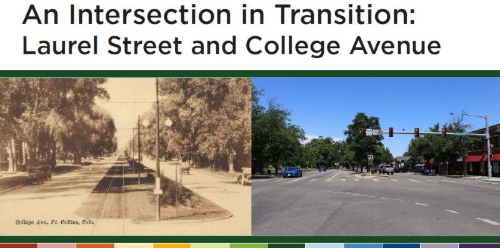
An Intersection in Transition: Laurel Street and College Avenue

Fort Collins is full of places that tell important stories about our shared past—stories about how our city developed, about why people made buildings look a certain way, and stories about the diverse range of people who have lived, worked, studied, and played here. These stories are often not visible on the surface of the buildings and streets we frequent. It usually takes some research to uncover them. The City regularly does this research to help identify important stories and places. Our goal is to share that information with property owners to better prepare and plan for the future.

Over the past two years, Historic Preservation staff documented forty-eight properties near the Laurel Street and College Avenue intersection. Staff spent time in the archives researching each property, learning what kinds of businesses operated here, who owned these places, what changes were made to buildings, and a bit about all the people that lived and worked in the neighborhood. The project uncovered stories about several first-generation Americans, the home of an influential librarian, a three-time Olympian and his ski-apparel business, and the city’s first strip mall.

Before 1945, most of the buildings in this area were smaller homes. Only a few business owners located commercial buildings along the 100 Blocks of Laurel. Although many of the people living in this neighborhood were middle- and working-class families, several wealthier families had larger, more elaborate homes along the main thoroughfare, College Avenue.

This changed dramatically after World War II. Colorado State University expanded, with a lot more students attending at the campus in the 1950s and 1960s. Many homeowners of houses along College Avenue and Laurel Street subdivided their homes to house students or converted them into commercial buildings. Some owners demolished their homes to make room for modern commercial buildings while others simply added a single-story commercial addition to the front. Despite the fact that there was a significant increase in building demolition in Fort Collins (and nationwide) in the postwar era, only a small number of homes in this area were completely demolished and replaced with new commercial buildings between 1945–1975. It seems that most property owners in the Laurel and College area creatively reused their buildings for new purposes or slowly transitioned from residential to mixed use to commercial use over the course of several years. Since 1975, the steady trend towards more commercial use has continued and only a few residential uses remain in this area.

Want to learn more about the project and the stories of those who lived and worked in the area? The full report is available on our website.

Historic Resource Spotlight

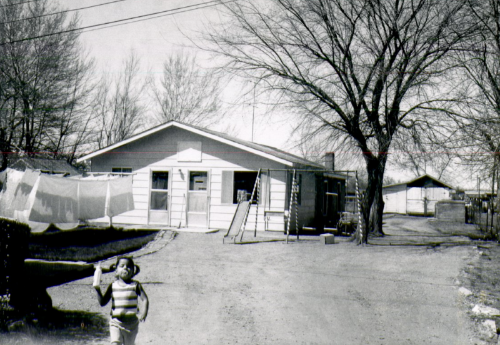
818.5 Sycamore St. – Lee and Doris Suniga Residence

Before you check out the exhibit honoring our local Hispanic and Mexican baseball players presented by Mujeres de Colores at the Center for Creativity at the Historic Carnegie Library, learn about local Hispanic baseball player Lee Suniga and his home at 818.5 Sycamore St. Lee, born in 1922 in Fort Collins, was the youngest son of Alex and Lasara Suniga. He worked alongside his family in sugar beet fields near the Harmony community. In 1936, the family moved to 818 and 818.5 Sycamore St., located in the Holy Family neighborhood. Due to its proximity to the river, railroad tracks, and industrial uses, like the town dump, this neighborhood was less attractive to those who could afford to live elsewhere. Although early residents in the Holy Family neighborhood represented a mix of ethnicities and backgrounds, by the time the Sunigas moved in, it had become almost entirely Hispanic. 

Lee eventually married Doris Sanchez, and they had two children, Louie and Bonnie. Lee, Doris, and their children moved into 818.5 Sycamore St. by 1948, while Alex and Lasara resided in the other home on the property. Doris worked in the Food Service Department at CSU for 25 years, retiring in 1985, and was also an avid golfer. Lee was an ironworker for much of his life, belonging to the Local 24 ironworkers' union for 53 years. He worked on projects across Colorado and Wyoming, such as the Crook County Courthouse, the Laporte Avenue water filtration plant, and Denver's Tabor Center. After the fire at the Holy Family Church in 1959, Lee also helped with its reconstruction, installing the structural iron and fabricating all the interior wrought iron, including the baptismal font, chairs, and kneelers. He also retired in 1985.

In his free time, Lee was active in local baseball. As a 13-year old in 1937, he carried water for the American Legion Post 187 semi-professional baseball team, and two years later, he was playing as a regular member. He played centerfield for the Legionnaires in the Rocky Mountain League for 11 years. From 1956–1960, he coached the team, and from 1960–1965, he served as the team's manager. Lee later became president of the Rocky Mountain League, and he helped to develop the Colorado Hispanic Baseball Hall of Fame. Lee received the Baseball Pioneer Award in 1998. Additionally, he collaborated with the Fort Collins Museum of Discovery on two exhibits focusing on Hispanic and baseball history and recorded multiple oral histories. He was honored in 2000 by the Fort Collins Historical Society with an award recognizing his work to preserve the heritage of Northern Colorado's Hispanic baseball teams.

(Photo: 818.5 Sycamore St., 1968 Tax Assessor Photo, Local History Archive at the Fort Collins Museum of Discovery)
Upcoming Historic Preservation Commission Meetings

Next Work Session: Sept. 10, 2025, at 5:30 p.m., in person at City Hall (300 Laporte Ave., CIC Room). Public may attend, but no public participation occurs at work sessions.

Next Regular Meeting: Sept. 17, 2025, at 5:30 p.m., in person at City Hall (300 Laporte Ave., Council Chambers) or virtually via Zoom. Public may attend and provide comment.

Agenda:

  • Consent Agenda
    • Minutes of Aug. 20, 2025
  • Discussion Agenda: 
    • Staff Activity Report
    • Report on Recent Nominations to the State Register of Historic Properties - Fort Collins Hispanic History (Romero House and Hispanic Leagues Baseball Field at City Park)
    • Conceptual Development Review - 1000 W. Prospect Rd., Coffin House - Proposed 6-story student housing project with adaptive reuse of main house and other site features
    • Conceptual Landmark Design Review - 100 N. College Ave., First National Bank Building - Detached patio pergolas
Learn More About the HPC

Historic Surveys

Surveys in Progress:
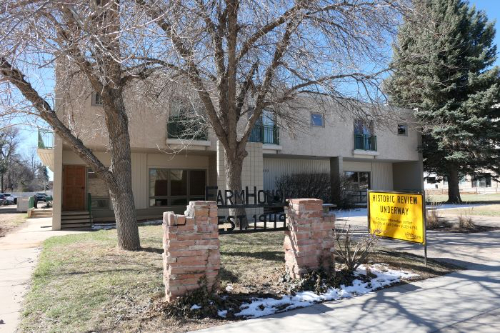
We are currently researching the following properties to determine if they are eligible to be Fort Collins Landmarks in association with a current development review application. Determinations of eligibility are based on the best available information today and are valid for five years. Members of the public with information regarding the history of these properties should contact Historic Preservation Services asap at preservation@fcgov.com.

  • 4305 & 4325 E. Harmony Rd. - 1920 farmhouse & 1971 gas station - Development Review - demolition proposed for new development
  • 622 S. Grant Ave, duplex built in 1940 - Proposed ADU
  • 237-241 Linden St, built in 1964 - facade modifications proposed

Recent Survey Results: 

  • 1215 S. Shields St. - 1914 single-unit dwelling - Development Review - demolition proposed to accommodate multi-unit building; Not Landmark Eligible
  • 1211 S. Shields St. - 1923 single-unit dwelling - Development Review - demolition proposed to accommodate multi-unit building; Not Landmark Eligible
  • 1207 S. Shields St. - 1949 single-unit dwelling - Development Review - demolition proposed to accommodate multi-unit building; Not Landmark Eligible
  • 1185 Westward Dr. - 1960 single-unit dwelling - Development Review - demolition proposed to accommodate multi-unit building; Not Landmark Eligible
  • 1501 S. Lemay Ave. - 1973 office building - Development Review - rooftop cell tower proposed; Not Landmark Eligible
View Older Survey Results

Single-Unit Dwelling Demolition (SUDDN) Notices

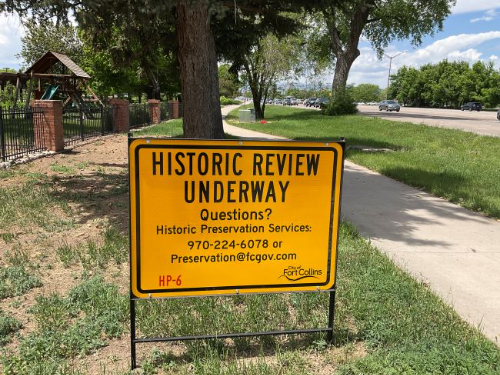
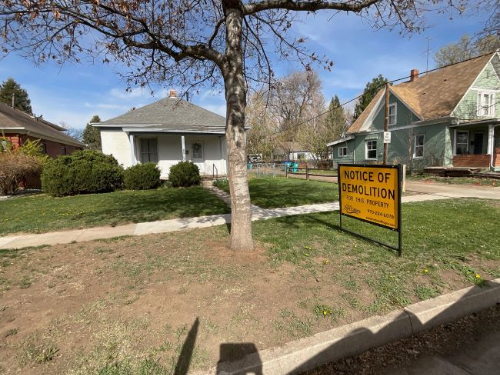
The City of Fort Collins requires public notification prior to the demolition of single-unit residences over 50 years of age. These notifications occur to inform neighbors of a potential change coming to their neighborhood and because certain groups can nominate a property for Landmark designation against the wishes of a property owner under Municipal Code Sec. 14-31 (the HPC by motion, a City Councilmember by written request, or three residents together by petition). Public noticing is considered complete the day after the HPC meeting for which it is noticed. Written public comments can be submitted to preservation@fcgov.com up to 48 hours prior to the HPC meeting for inclusion with the meeting packet. These notifications appear on the commission's discussion agenda, and an opportunity for spoken public comment will also be provided at the meeting. Visit the recently updated Single-Unit Dwelling Demolition Notification webpage for more detailed information on this process.

Active Demolition Notices:

  • None

Recently Completed Demolition Notices:

  • 1617 Person Ct., built c. 1947; (no public comment at 8/20/2025 HPC Meeting; no action taken by HPC)
  • 408 N. Loomis Ave., built c. 1906; (no public comment at 5/21/2025 HPC Meeting; no action taken by HPC)
  • 121 N. Whitcomb St., built c. 1895; (no public comment at 5/21/2025 HPC Meeting; no action taken by HPC)
  • 712 Scenic Dr., built 1975; (no public comment at 4/16/2025 HPC meeting; no action taken by HPC)
  • 125 W. Trilby Rd., built 1963; (no public comment at 4/16/2025 HPC meeting; no action taken by HPC)
  • 616 W. Olive St., built 1924; (no public comment at 4/16/2025 HPC meeting; no action taken by HPC)
View Older Demolition Notices

History Tidbit

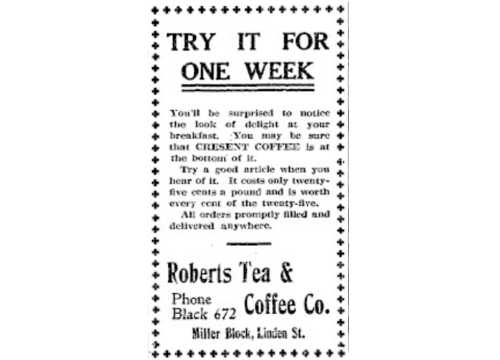
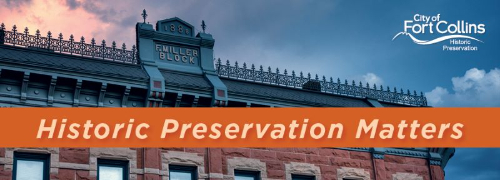
The Miller Block at 11 Old Town Square has a history with coffee and tea! Now Explorado Market, and Little Bird Cafe before that, the Miller Block was home to Roberts Tea & Coffee Company 120 years ago. In 1905, you could get your Crescent Coffee from Roberts Tea & Coffee at 25 cents per pound and have it delivered to your door.

The Miller Block is historically designated as part of the Old Town Historic District, both at the local level and on the National Register of Historic Places.

Historic Preservation Services | preservation@fcgov.com | 970-224-6078
281 N College Ave
Fort Collins, CO 80524