Busting Barriers in Film and the Neighborhood: Hattie McDaniel and American Housing Freedom
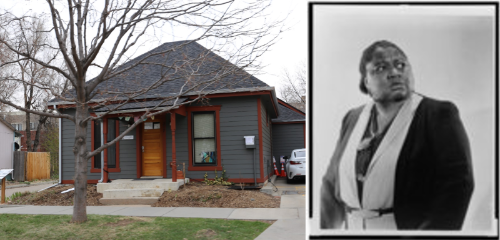
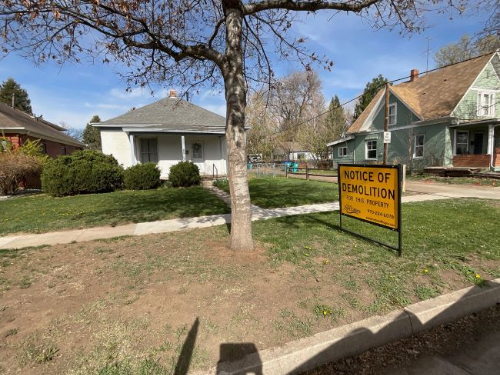
If you’ve been down Cherry Street near the historic trolley barn, you may have seen this little house at 317 Cherry St. For a few years in the early 1900s, this was the childhood home of Hattie McDaniel, who would grow up to be a national film and radio icon and a civil rights activist.
Hattie was born in 1893 in Wichita, Kansas, to Henry and Susan McDaniel. The family eventually moved to Denver, and then to Fort Collins in 1900. They moved back to Denver by 1908, but Hattie was here long enough to make some childhood friends in the neighborhood and attend the Franklin School. After attending high school in Denver, she rose to regional prominence as a vaudeville and stage actor, and to national prominence as a regular on Denver’s KOA radio station. She moved to Hollywood, California in 1931 and began a successful film career, starring in over 300 films. Her best-known role was as Mammy in the 1939 film Gone with the Wind, for which she won an Academy Award, becoming the first Black American to do so.
Hattie McDaniel is known as a pioneer on the screen, opening up space in the American film industry for Black Americans. But, she also helped strike down housing discrimination laws in the United States. Through the 1940s, racially restrictive covenants were commonplace in the U.S.; these were legal restrictions placed on private property that limited who could purchase or live on the property based on race. In 1941, Hattie purchased a home at 2203 S. Harvard Blvd. in Los Angeles, in the prestigious Sugar Hill neighborhood, which had racially restrictive covenants. Later in the 1940s, several white residents of Sugar Hill sued for enforcement, claiming that McDaniel and other Black Los Angelinos had illegally purchased their properties in violation of those covenants. McDaniel helped organize the legal defense, hiring well-known civil rights attorney Loren Miller to argue the case in Los Angeles Superior Court. The judge agreed with the defense, and the case was eventually dropped. Loren Miller and Thurgood Marshall used the 1945 Sugar Hill decision as precedent to support the 1948 U.S. Supreme Court Case Shelley v. Kraemer, which struck down racial covenants nationwide as unconstitutional.
Although this property is not historically designated, it is important; we encourage you to stop by and read the plaque installed by the Fort Collins Pioneer Association in 2016. This home is a private residence; please remain on the public sidewalk and respect the privacy of the residents.
Thinking about the long arc of history in the U.S., what do you think is most important to remember about Hattie McDaniel?
What issue in your local community would you like to see changed and how might you get involved to help change it?
(Photos: Left - 317 Cherry St., HPS; Right - Hattie McDaniel, 1947, Library of Congress)