Making Moving Easier: Women and Transportation Equity in Fort Collins
If you’ve ever ridden your bicycle in the bike lanes on the 700 block of West Olive Street, did you know you’re riding through a piece of Fort Collins women’s history and bicycling history? The street definitely looks different today, with no street markings between Loomis and Grant Avenues, but in 1970, thanks to the hard work of local women, the City tested out its first bike lanes right there. Fort Collins women have had an outsized influence on making sure Fort Collins’ transportation system works for all users, not just folks in cars.
Betty Sears & Ruth Orr
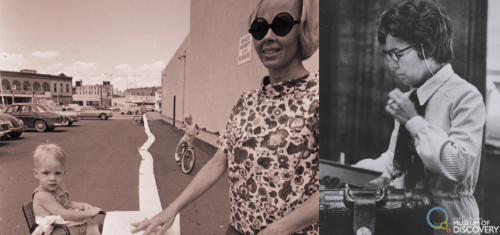
Betty Sears is sometimes considered the “mother” of Fort Collins bike lanes on city streets. After living in Davis, California, and seeing bike lanes already on streets, Betty returned to Fort Collins with a mission. In early 1970, Betty and her friend, Ruth Orr, wrote letters to the editor of the Coloradoan supporting what are now called “road diets” to create bike lanes. They started a petition, knocking on doors until they got 1,700 signatures to submit to the City in favor of starting a bike lane system. Supporters hoped to improve safety, reduce air pollution, and reduce traffic by providing safe alternatives to driving. Despite opposition from City administrators and engineers, City Council directed to start the experiment, which began with a few test bike lanes. Adding to the off-street bike trails along the Poudre River and Spring Creek, the on-street bike lanes proved popular. Ruth and Betty’s foundational work led to today’s extensive biking network, with Fort Collins being one of only three cities in the country retaining a Platinum certification with the League of American Bicyclists.
Mabel Preble
Mabel Preble became the City’s first woman mayor in 1972 after being elected to City Council and selected by her peers shortly thereafter as the Mayor. Under the City's Designing Tomorrow Today initiative, Preble oversaw projects like the new downtown library and the Lincoln Community Centre. After previously serving as chair of the City’s Commission for Senior Citizens and recommending better transportation for the elderly, Mayor Preble oversaw the establishment of Transfort and its accessibility partner Care-a-van. Her work and advocacy helped return public transit to Fort Collins after a twenty-year hiatus, which is now a critical part of helping Fort Collins residents get around without a car.
Check out these places that are part of the story:
-
Oak Street Plaza - First Transfort hub for all bus routes starting in 1974
-
Ruth Orr Residence, 1970-1971, 825 W. Olive St.
- Mable Preble Residence, 1970-1975, 717 Dartmouth Tr.
Thinking about these examples, what issue in Fort Collins are you passionate about? How might you influence a positive community outcome?
(Photos: Left - Betty Sears showing the 1,700-person petition to begin a Fort Collins bike lane program, 1970, Fort Collins Coloradoan; Right - Mabel Preble, City Council, c. 1970s, FCMoD)